
Saeed claims he was neither a security risk nor his outfit ever engaged in terrorist activities.

A day after filing a petition in the Pakistan Supreme Court seeking a probe into the 'memogate' scandal, former premier Nawaz Sharif on Thursday sought its direction to bar former envoy to the United States, Husain Haqqani, from leaving the country till the probe is completed.
The repercussions of the Pakistan Supreme Court's verdict declaring the amnesty law as 'unconstitutional' has started showing effects with the Interior Ministry placing the names of 253 beneficiaries of the National Reconciliation Ordinance, including Interior Minister Rehman Malik, on the Exit Control List. The latest move has thus barred Malik from moving out of the country. The names of other prominent people on the ECL include Defence Minister Ahmed Mukhtar.
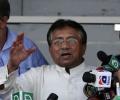
Beleaguered former military ruler Pervez Musharraf's efforts to wriggle out of a treason case suffered a setback today when a Pakistani court rejected his objections against the special court set up to try him.

Saeed and the four men added to the fourth schedule of the ATA were also placed under house arrest on January 30 in Lahore amid an angry uproar from his party and political allies.

The Pakistan government on Monday asked the Supreme Court to launch treason proceedings against former dictator Pervez Musharraf for imposing emergency in 2007, the first time the civilian administration has sought the criminal prosecution of a military ruler.
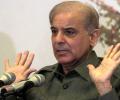
The interior minister said Shehbaz had not submitted any medical documents for travelling abroad or specified the treatment for his illness.
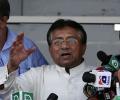
Musharraf, 73, in a talk show on Dunya News last week had said: "Well he (Raheel Sharif) did help me and I am absolutely clear and grateful. I have been his boss and I have been the army chief before him... He helped out, because the cases are politicised, they put me on the exit control list, they turned it into a political issue."

Almedia's name was put on the Exit Control List this week after he reported about a verbal clash between the military and the government.
A Pakistani court has extended the custody of former president General Pervez Musharraf till October 30 in the Lal Masjid case and ruled that the next hearing would be held at his Chak Shahzad farmhouse, which has been turned into a sub-jail.
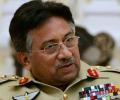
Pervez Musharraf's legal woes mounted on Friday as a Pakistani special court conducting his treason trial issued a bailable arrest warrant for the beleaguered former dictator and ordered his production on February 7.

A Pakistani court on Friday remanded beleaguered former President Pervez Musharraf to judicial custody for 14 days while another court rejected a request to bar him from travelling out of the country.

There is strong evidence to support the charge of high treason against former military ruler Pervez Musharraf and his punishment could be either the death penalty or life imprisonment, the Pakistan government's top law officer said on Wednesday.

The Mumbai attack mastermind had indicated about a week before his arrest that he might launch Tehreek Azadi Jammu and Kashmir (TAJK) to 'expedite the freedom of Kashmir'.

When asked to explain, Musharraf, 73, said Gen Sharif played a role in "releasing the pressure" on courts to prevent him from leaving the country.
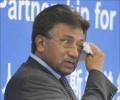
Former Pakistani military ruler Pervez Musharraf was on Wednesday freed after spending nearly six months in house arrest as he has been granted bail in four major cases registered against him, including one over the assassination of Benazir Bhutto.
The judge said the attitude of the accused left no option for the court, but to freeze Musharraf's bank accounts and confiscate his property.
Jamaat-ud-Dawah chief Hafiz Saeed's detention may help ease India-Pakistan tension, media reports in Islamabad said on Tuesday even as supporters of the Mumbai attack mastermind launched protests across major cities against the government's decision which they say was taken under pressure from the US and India.
 © 2026 Rediff.com - Advertise with us - Disclaimer - Privacy Policy - Sitemap - Feedback - About us - Terms of use - Grievances